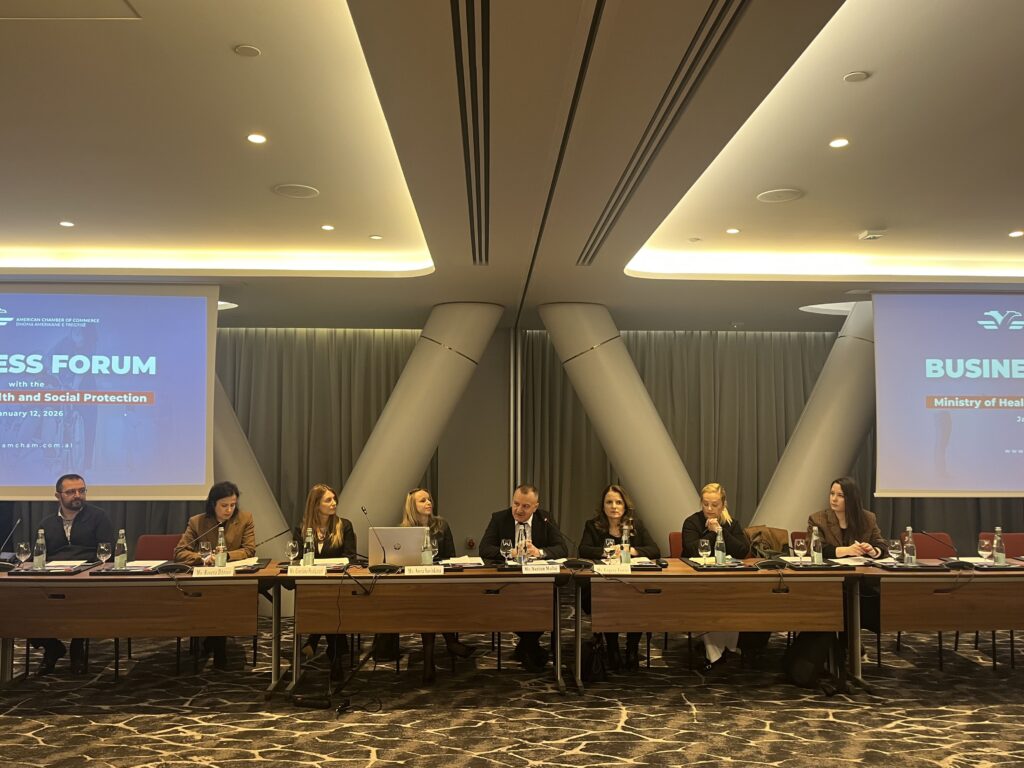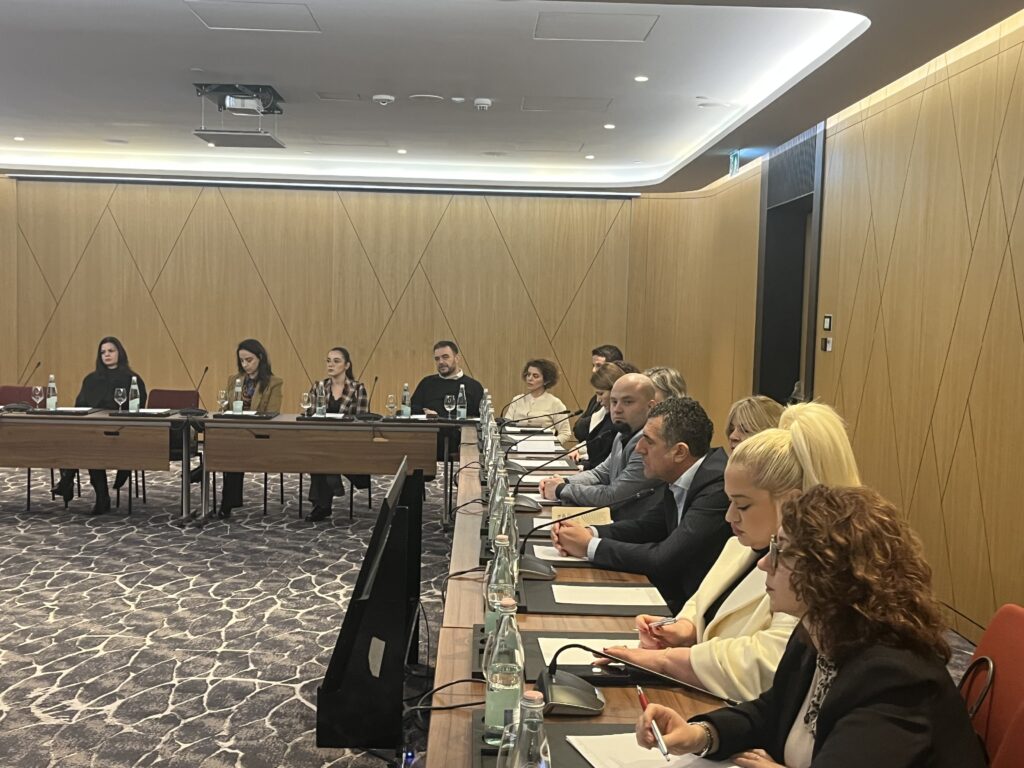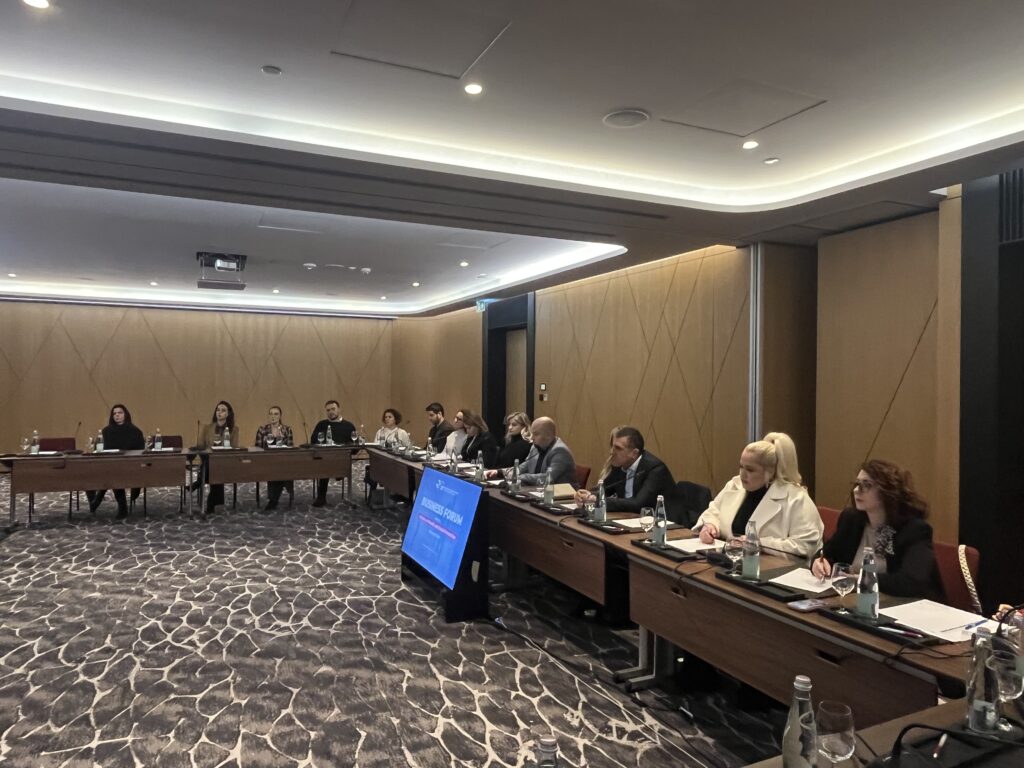

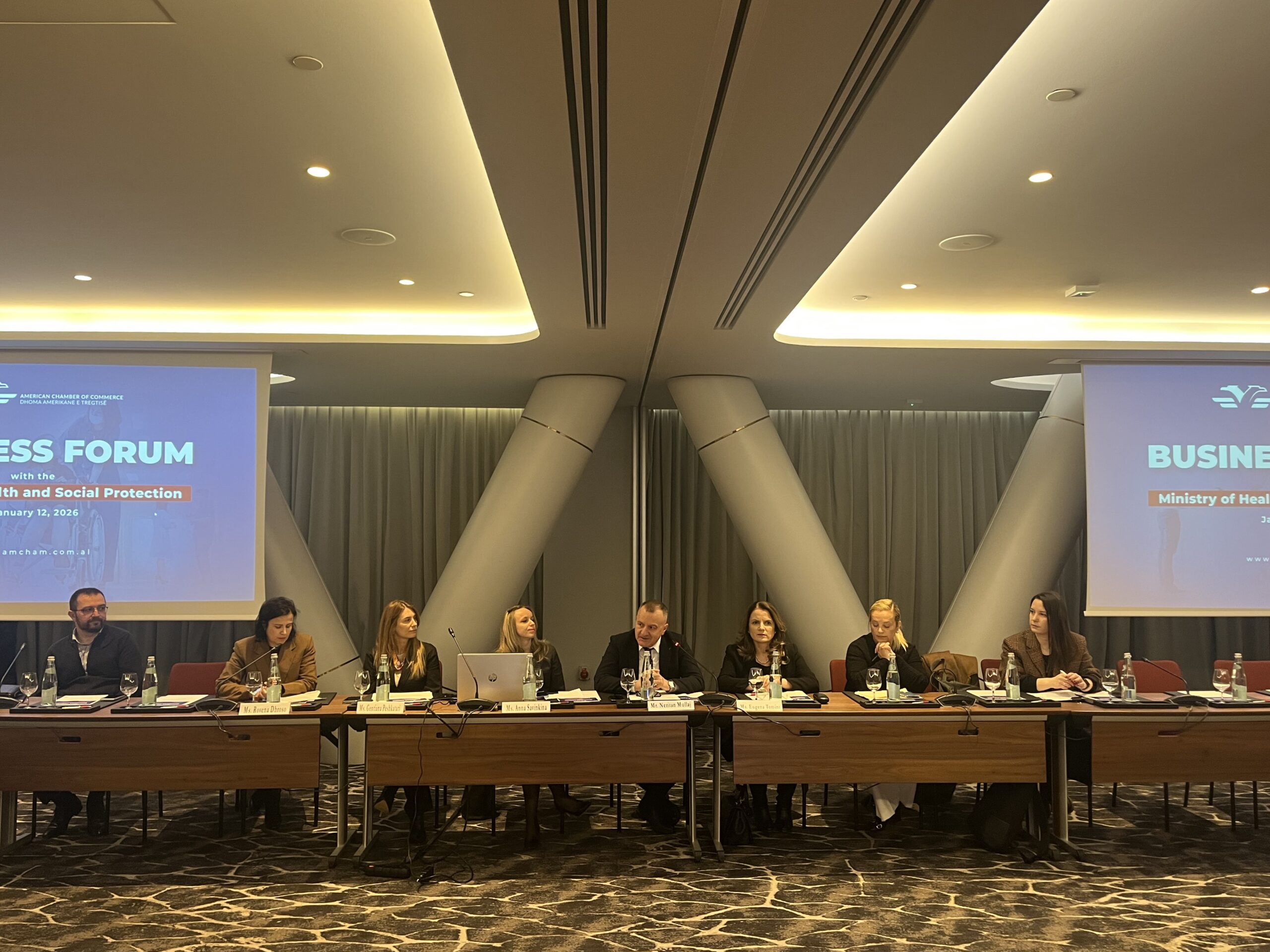
American Chamber of Commerce with the initiative of the Health Care Committee organized a working roundtable with the Ministry of Health to discuss some of the key challenges faced by businesses operating in this sector. The Deputy Minister of Health and Social Protection, Ms. Eugena Tomini, took part in a constructive discussion focused on the legal framework and the functioning of healthcare systems, with an impact not only on business activity but also on public health.
The vital importance of issues such as the reimbursable medicines list, pricing methodology, and increasing the level of the healthcare budget underscores the necessity of dialogue with the Ministry of Health as an essential means of identifying the most effective approaches for drafting and implementing the regulatory framework.
“For two years now, the Health Committee has established a clear bridge of communication with the Ministry of Health to develop a constructive dialogue on issues that we have addressed in a Position Paper and continue to follow closely. We believe that dialogue is the most effective tool for resolving these matters,” stated Executive Director Neritan Mullaj during the meeting.
Deputy Minister Eugena Tomini explained that the increased focus on the healthcare sector has been reflected not only in a higher budget allocation, but also in a clear strategy aimed at paving the way for innovative treatments and diagnostics, as well as ensuring adequate healthcare services for the population. Particular attention has been given to oncological healthcare, due to the sensitivity of the diseases treated within this service and the ongoing efforts to establish high clinical standards. For this purpose, approximately EUR 15 million have been allocated in the budget. The establishment of the National Institute of Tumors will serve this objective by coordinating policies and best practices with EU countries and a counterpart institution in Milan. Additionally, significant emphasis will be placed on the digitalization of the entire process, bringing the sector to the necessary level of technological development, facilitating interaction among healthcare institutions, and improving decision-making processes.
Ms. Rovena Dhroso, Member of the Board of the American Chamber, emphasized the need for expertise in decision-making and highlighted the important role that public–private partnerships can play, particularly at moments when decisions are made and regulatory frameworks are developed.
The Chair of the Committee, Ms. Anna Savinkina, and the Vice Chair, Ms. Genta Peshkatari, presented the key issues on which the Committee is currently working, addressing both short-term and long-term objectives.
The update of the model for drafting the reimbursable medicines list, allowing for the inclusion of innovative drugs, as well as increasing the healthcare budget from 2.8% to 6%, in line with other countries in the region, were two of the main issues addressed by Chair Anna Savinkina.
Another concern raised by pharmaceutical companies relates to the pricing methodology, particularly the need to move away from referencing the minimum price and instead adopt an average price as a benchmark. Ms. Peshkatari stressed the necessity for the regulatory framework to revise the reference countries used for pricing, focusing on countries such as Slovenia and Norway rather than North Macedonia and Serbia. This process is vital for the operations of pharmaceutical companies, as it directly affects business sustainability while simultaneously impacting public healthcare services. A fair and transparent pricing methodology would enable the market entry of well-established pharmaceutical brands capable of delivering innovative medicines and therapies, not only in the oncology sector.
During the meeting, members of the Health Committee also raised concerns regarding timelines for price determination, as well as the need for investment in human capital, which is critical for the healthcare system. The implementation and continuous upgrading of digital information systems was another issue highlighted by Committee members.
The meeting concluded with an agreement that experts from the Ministry of Health and representatives of the Health Committee will continue discussions at a technical level to further elaborate on specific issues requiring consultation and to guide necessary changes in the regulatory and legal framework.