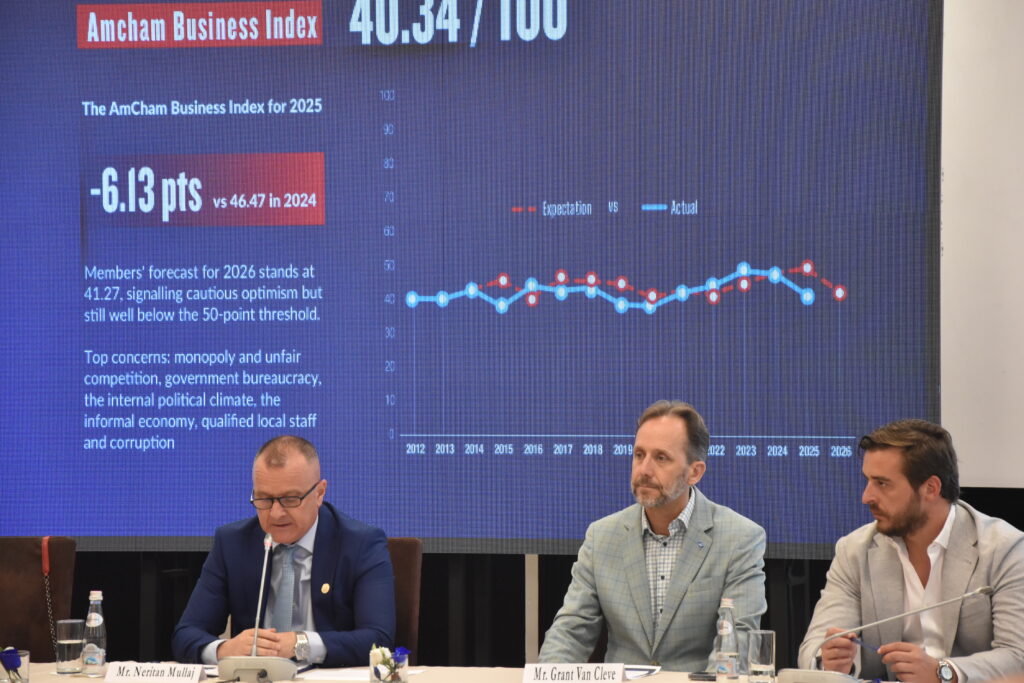

The AmCham Business Index for 2025 stands at 40.34 points out of 100, marking a decline of 6.13 points compared to 2024, when the index stood at 46.47 points.
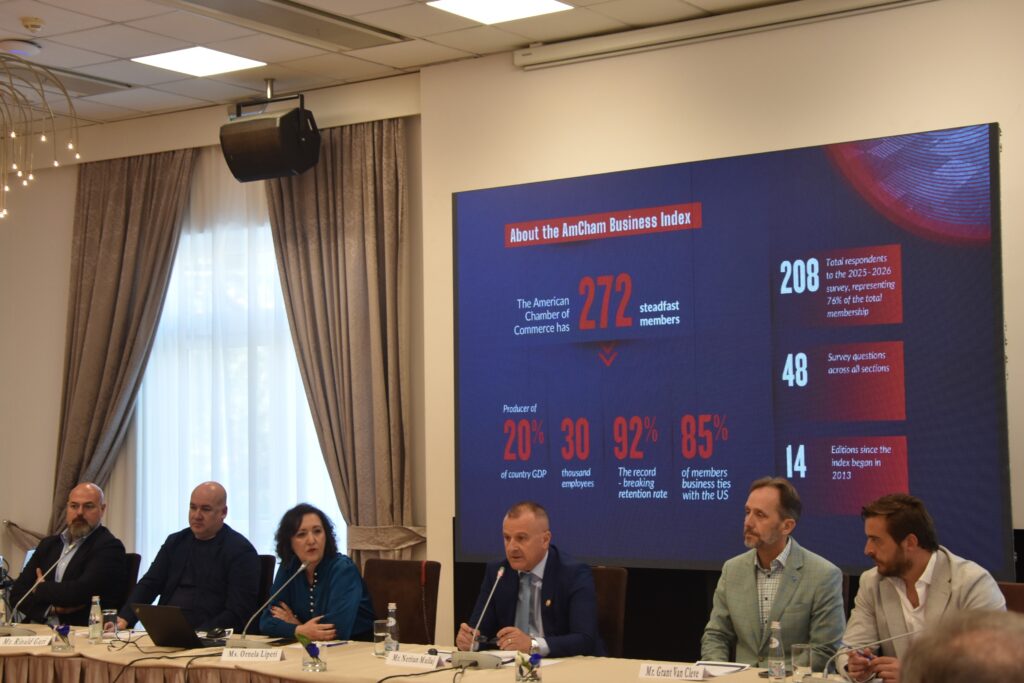
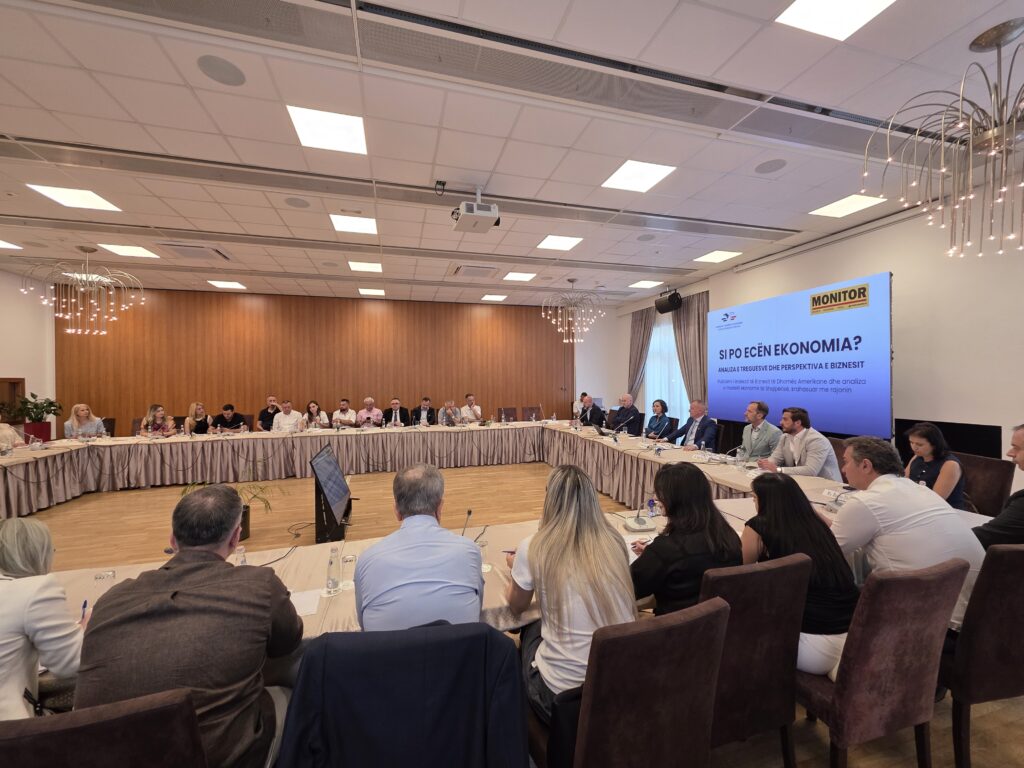
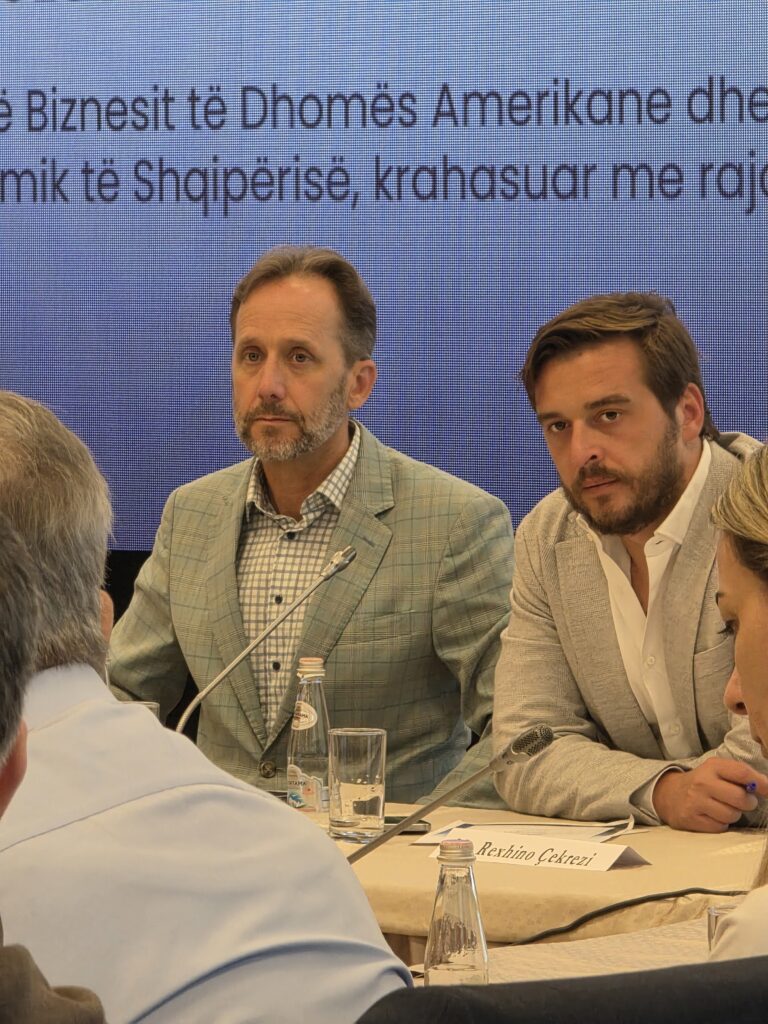
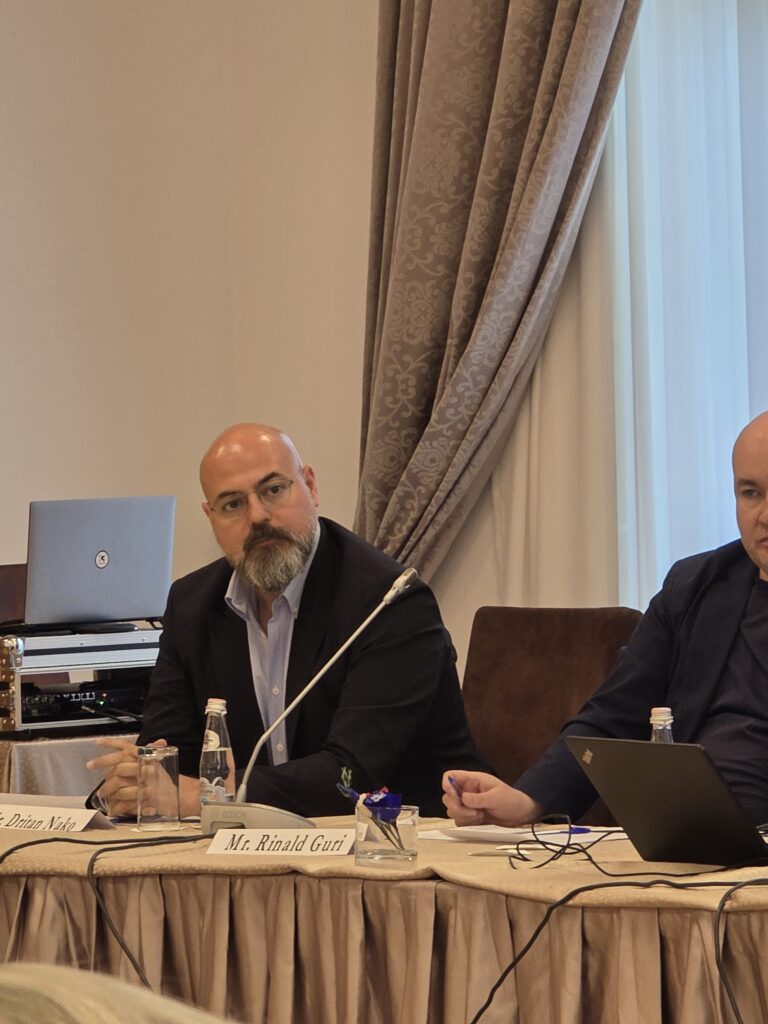
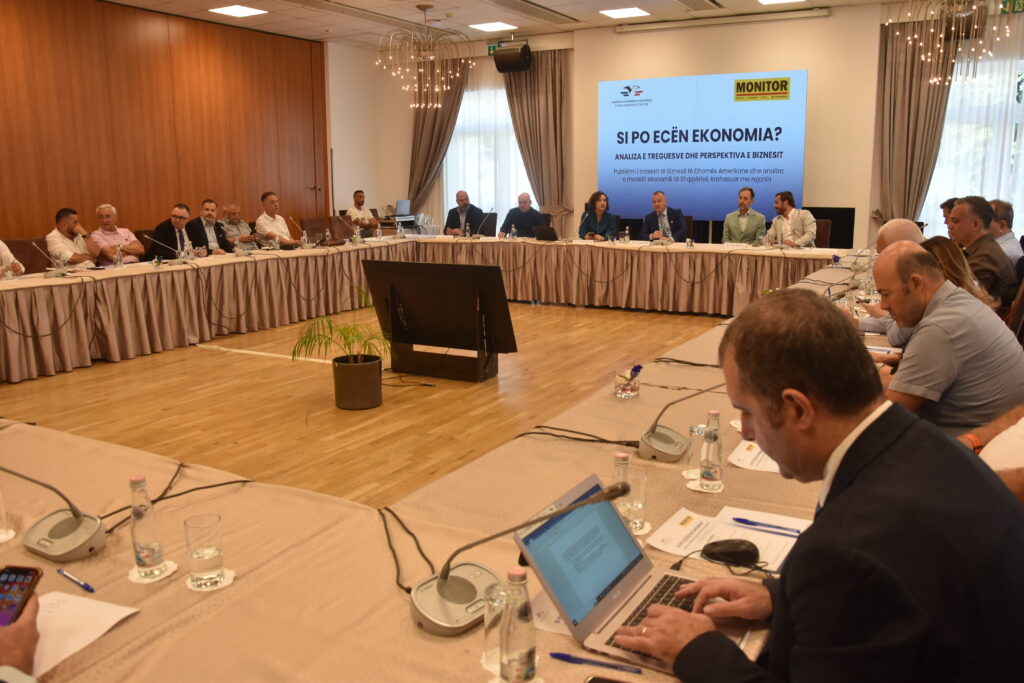
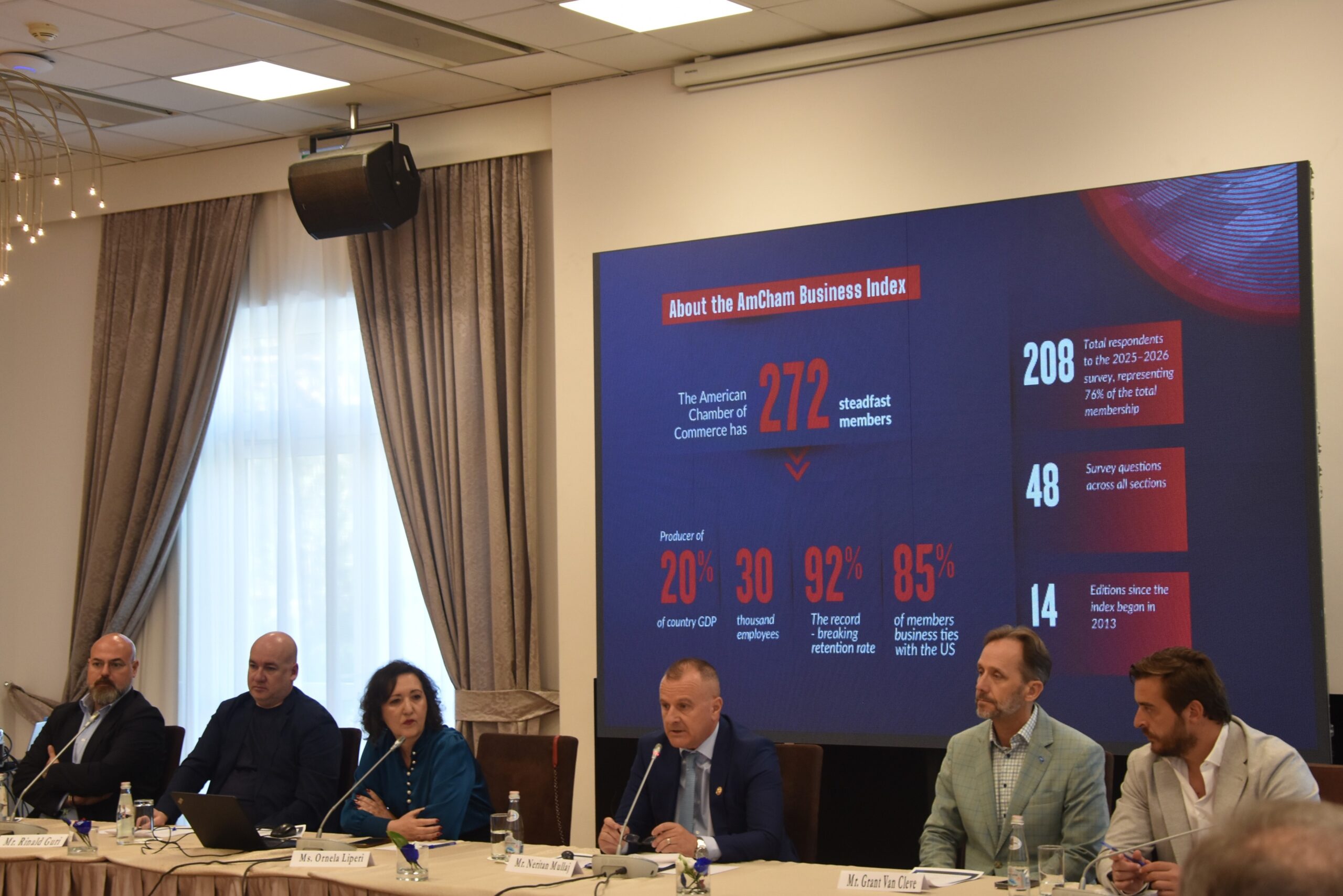
The American Chamber of Commerce in Albania, represented by its Executive Director Neritan Mullaj, presented the results of the 2025 Business Index during an event organized in cooperation with Monitor Magazine. Discussions highlighted a clear message: the business climate has deteriorated, and bold reforms are needed to restore investor confidence.
The findings, based on AmCham members’ perceptions of developments during 2025, indicate that the main concerns for businesses are monopolies and unfair competition at 26.11 points , followed by government bureaucracy at 26.39 points, the domestic political climate at 28.06 points, the level of informality in the economy at 28.19 points, the shortage of qualified labor at 28.67 points, and corruption at 28.67 points.
The annual survey has now established a valuable historical record, illustrating the evolution of key indicators from year to year. One of the most significant findings of the Index is the marked deterioration of several fundamental indicators. The largest declines compared to the previous year were recorded in the domestic political climate indicator, down 14.00 points; infrastructure, down 12.29 points; government bureaucracy, down 9.54 points; corruption, down 9.34 points; the informal economy, down 6.08 points; law and order, down 6.17 points; and monopolies and unfair competition, down 4.85 points. These results indicate that businesses perceive the economic environment as less predictable and more challenging than a year ago.
Among other indicators affecting the business climate, the shortage of qualified labor continues to attract significant attention and remains one of the most serious challenges facing businesses. Despite a slight improvement in the indicator, around 70 percent of AmCham members report that finding qualified staff is difficult or very difficult, while expectations for improvement in the short term remain limited.
Nevertheless, the Business Index also highlights indicators that remain within positive perception levels. Businesses rated above 50 points the electricity supply, demand for products and services, relations with customs authorities, as well as developments in investment and employment. For the first time, the Index included indicators assessing the digital environment. While digital infrastructure received positive ratings, public electronic services and cybersecurity were identified as key challenges. Although businesses expect a slight improvement during 2026, the projected level remains below the 50-point threshold, which is considered the dividing line between positive and negative perceptions of the business climate.
In response to these challenges, AmCham proposes a reform agenda focused on seven key priorities: strengthening the investment climate and regulatory certainty, combating corruption and increasing transparency, ensuring effective public consultations, modernizing the tax system, developing human capital, enhancing the competitiveness of the tourism sector, and modernizing the healthcare system.
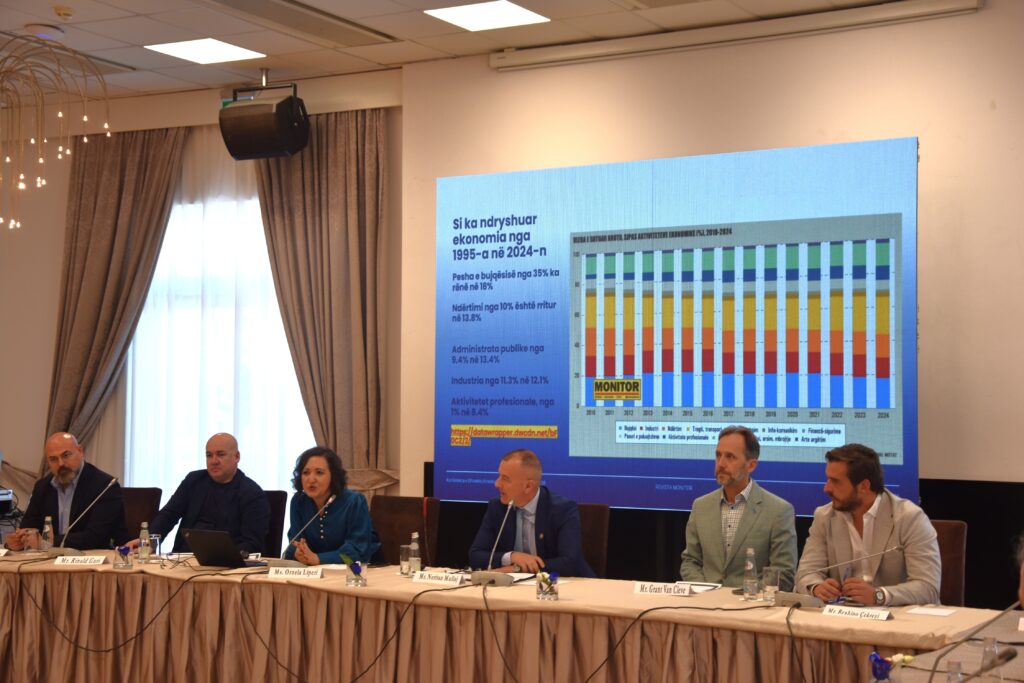
Monitor Magazine’s Editor-in-Chief, Ornela Liperi, presented an overview of macroeconomic indicators and an analysis of economic growth, emphasizing several findings that demonstrate how Albania has built an economic model heavily reliant on construction—more so than any other country in Europe. “Even after 30 years of transition, Albania cannot continue to rely so heavily on construction,” said Ornela Liperi, Editor-in-Chief of Monitor Magazine.
In contrast, industry contributes less to Albania’s economy compared to other countries in the region and the European Union average, accounting for 12% of gross value added, versus the EU average of 19%. In other regional countries, with the exception of Montenegro, whose economy is more service-oriented, this contribution exceeds 20%, nearly double Albania’s level. Although its share has been declining, Albania remains the most agriculture-dependent country in Europe, with agriculture accounting for 18% of gross value added, compared to the European Union average of 2%. Kosovo ranks second, at 9.3%.
During discussions with participants, the American Chamber of Commerce and Monitor Magazine emphasized that Albania has considerable potential to attract investment and achieve economic development. However, restoring business confidence requires concrete reforms, more effective institutions, and a fairer and more predictable environment for all market participants.